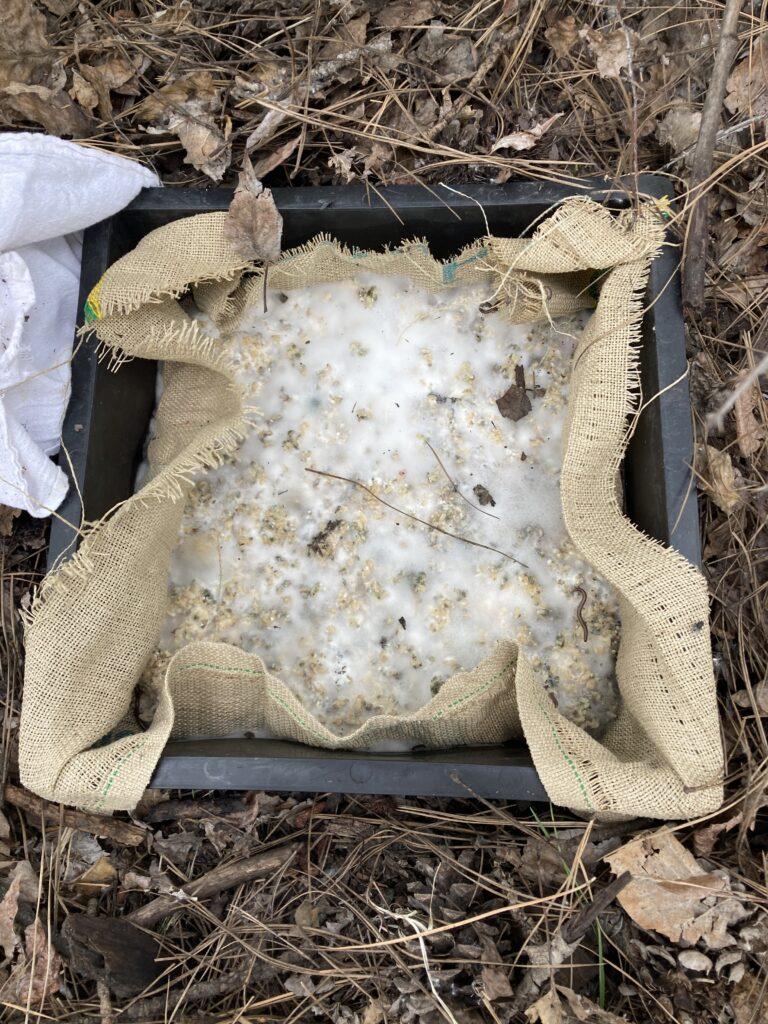
Indigenous Microorganisms (IMO) are naturally occurring beneficial microbes collected from the local environment and multiplied for use in farming. They help decompose organic matter, reduce foul odors, improve soil health, and enhance animal waste management.
Materials Needed
For IMO-1 (Microbe Collection)
- Cooked rice (not too wet)
- Wooden or plastic container
- Paper towel or breathable cloth
- Rubber band
- Forest leaf litter, bamboo grove, or undisturbed soil area
Step 1: Prepare IMO-1
Procedure
- Fill a shallow wooden or plastic container halfway with cooked rice.
- Cover with paper towel or breathable cloth.
- Place the container in a forested area, bamboo grove, under a tree, or near rich leaf litter.
- Cover lightly with dry leaves.
- Leave for 3–7 days.
Success Indicator
The rice should become covered with:
- White mold
- Yellowish beneficial fungi
- Pleasant earthy smell
Avoid:
- Black mold
- Green mold
- Rotten smell


Step 2: Produce IMO-2
Materials
- IMO-1
- Brown sugar (equal weight)
Procedure
- Mix IMO-1 and brown sugar at 1:1 ratio.
- Place in a clean container.
- Store in a cool shaded area for 5–7 days.
The sugar preserves and multiplies the microorganisms.
Step 3: Produce IMO-3
Materials
- IMO-2
- Rice bran or wheat bran
Procedure
- Mix IMO-2 with water.
- Spray onto rice bran until moisture reaches about 60%.
- Heap the bran mixture.
- Cover loosely.
- Ferment for 5–7 days.
Temperature may rise to 40–50°C due to microbial activity.
Step 4: Produce IMO-4
Materials
- IMO-3
- Topsoil (preferably fertile soil)
Procedure
- Mix equal parts IMO-3 and soil.
- Moisten slightly.
- Ferment for 5–7 days.
This creates a stable microbial inoculant for farm use.
Using IMO for Odorless Farming
Deep Litter Poultry House
Apply:
- 1 kg IMO-4 per 10–20 m² of litter.
- Spray diluted IMO solution weekly.
Benefits:
- Reduces ammonia odor.
- Keeps litter drier.
- Reduces flies.
- Improves bird health.
Piggery
Apply IMO directly to:
- Bedding
- Floors
- Manure accumulation areas
Spray:
- 1 liter IMO solution diluted in 100 liters of water.
Benefits:
- Significant odor reduction.
- Faster manure decomposition.
- Reduced fly population.
BSF Maggot Farm
Spray diluted IMO on:
- Feed preparation areas
- Waste storage areas
- Larval bins
Benefits:
- Controls foul odors.
- Promotes beneficial fermentation.
- Suppresses harmful bacteria.
Fish Farm
Apply IMO around:
- Pond edges
- Sludge areas
- Wastewater channels
Benefits:
- Improves water quality.
- Accelerates organic matter breakdown.
- Reduces offensive smells.
IMO Odor-Control Spray Formula
Ingredients
- 1 liter IMO-2
- 1 liter molasses
- 100 liters clean water
Mix thoroughly and spray:
- Poultry houses
- Piggeries
- Compost piles
- Waste handling areas
Frequency:
- 2–3 times per week initially.
- Weekly for maintenance.
Critical Thinking Questions
- Why are microorganisms from local forests often more effective than commercial microbes?
- How does IMO help reduce ammonia odor in poultry houses?
- Why is brown sugar used in making IMO-2?
- What would happen if the rice in IMO-1 developed black mold?
- How can IMO reduce fly populations in livestock farms?
- Why should IMO be applied regularly rather than only once?
- How does IMO support odorless pig farming?
- Why is moisture control important during IMO fermentation?
- How can IMO improve the performance of a BSF maggot farm?
- Why is IMO considered a low-cost solution for sustainable agriculture?