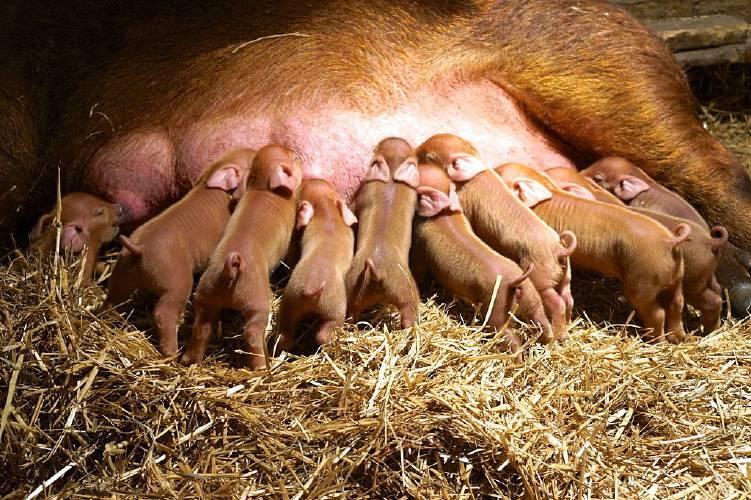
1. Selecting Breeding Stock
Choose only healthy, fast-growing pigs with:
- Strong legs and feet.
- Good body length and muscling.
- Normal reproductive organs.
- Good temperament.
- No history of genetic defects or chronic illness.
Boar Selection
- Minimum age: 8–10 months (preferably 10–12 months for breeding).
- Weight: 120–150 kg or more.
- Active libido and proven fertility.
- Do not overuse young boars.
Gilt (First-time Sow) Selection
- Breed at 7–8 months of age.
- Body weight: 130–150 kg.
- At least 12–14 well-spaced functional teats.
- Breed on the second or third heat for better litter size and longevity.
Understanding Heat (Estrus)
A sow or gilt usually comes into heat every 21 days if she is not pregnant.
Signs include:
- Swollen, reddish vulva.
- Mounting other pigs.
- Standing still when pressure is applied to her back (standing reflex).
- Restlessness.
- Increased vocalization.
- Clear mucus discharge.
- Reduced appetite.
Heat lasts:
- Gilts: 24–48 hours.
- Sows: 48–72 hours.
Best Time to Breed
The goal is for sperm to be present before ovulation.
Gilts
- First mating: 12 hours after standing heat begins.
- Second mating: 12 hours later.
Sows
- First mating: 24 hours after standing heat begins.
- Second mating: 12–24 hours later.
Double mating generally improves conception rate and litter size.
Natural Mating
- Use one healthy boar for one sow at a time.
- Allow mating in a quiet, non-slippery pen.
- Supervise the process.
- Ensure successful ejaculation before separating the animals.
- Do not disturb the pair during mating.
Recommended boar workload:
- Young boars: 2–3 services per week.
- Mature boars: 4–6 services per week.
Artificial Insemination (AI)
Advantages:
- Better genetics.
- Lower disease transmission risk.
- One boar can service many sows.
- Easier breeding management.
AI should be performed at the correct time after heat detection for the best conception rates.
Breeding Records
Maintain detailed records for every sow.
Include:
- Ear tag or identification number.
- Date heat was observed.
- Date(s) of breeding.
- Boar identification.
- Expected farrowing date (114 days later).
- Actual farrowing date.
- Number born alive.
- Stillbirths.
- Mummified piglets.
- Piglets weaned.
- Weaning date.
- Health observations.
Good records help identify high-performing and low-performing animals.
Pregnancy (Gestation)
Gestation period:
3 months, 3 weeks, and 3 days (114 days).
During pregnancy:
- Feed a balanced gestation ration.
- Avoid obesity.
- Provide constant access to clean water.
- Reduce stress.
- Vaccinate and deworm according to the farm health program.
- Observe daily for illness or abortion.
Pregnancy can often be confirmed:
- Ultrasound at 25–35 days after breeding.
- No return to heat after 21 days is a good indication but not proof of pregnancy.
Preparing for Farrowing
Move the sow into a clean farrowing pen about 5–7 days before the expected farrowing date.
Prepare:
- Clean, disinfected pen.
- Dry bedding (if applicable).
- Heat lamp or creep area for piglets.
- Clean towels.
- Gloves.
- Lubricant.
- Iodine or chlorhexidine for umbilical cords.
- Record sheet.
- Clean water.
Signs farrowing is near:
- Enlarged udder.
- Milk can often be expressed 12–24 hours before birth.
- Swollen vulva.
- Nest-building behavior.
- Restlessness.
- Reduced appetite.
Farrowing Supervision
Whenever possible, supervise farrowing without disturbing the sow.
Normal interval between piglets:
- 15–30 minutes.
If more than 45–60 minutes pass between piglets and the sow is straining, veterinary assistance may be needed.
For each newborn:
- Clear mucus from the mouth and nose.
- Dry thoroughly.
- Ensure breathing.
- Disinfect the umbilical cord if needed.
- Help weak piglets find a teat.
- Ensure every piglet receives colostrum within the first 6 hours, ideally within the first 2 hours.
Placenta Management
The placenta should be removed and disposed of promptly after it is expelled.
Although some sows naturally eat the placenta (placentophagy), removing it is recommended because it:
- Improves cleanliness.
- Supports farm biosecurity.
- Reduces attraction of flies and scavengers.
- Allows monitoring for retained placental tissue.
- Helps keep the farrowing pen sanitary.
Piglet Care After Birth
Within the first day:
- Ensure adequate colostrum intake.
- Keep piglets warm (30–34°C in the creep area).
- Prevent crushing by the sow.
- Identify weak piglets for extra attention.
Within the first week (according to veterinary advice and local practice):
- Iron injection.
- Tail docking (where permitted and necessary).
- Needle teeth clipping only if justified.
- Ear tagging or identification.
- Castration of male piglets if practiced.
African Swine Fever (ASF)
African Swine Fever (ASF) is one of the most serious viral diseases affecting pigs.
Key Facts
- No cure.
- No widely available commercial treatment.
- Mortality may reach 100%.
- Does not infect humans.
- Humans cannot contract ASF by eating pork.
- Causes severe economic losses.
Common Signs
- Sudden death.
- High fever.
- Weakness.
- Refusal to eat.
- Red or bluish skin (especially ears, abdomen, and legs).
- Bloody diarrhea.
- Difficulty breathing.
- Abortions in pregnant sows.
ASF Prevention
Strict biosecurity is the most effective protection.
- Restrict farm visitors.
- Use dedicated farm clothing and boots.
- Disinfect all equipment and vehicles entering the farm.
- Quarantine new pigs for at least 30 days.
- Never feed untreated food waste or swill.
- Purchase pigs only from trusted disease-free sources.
- Control rodents, wild pigs, and ticks where relevant.
- Isolate sick animals immediately.
- Dispose of carcasses safely.
- Report suspected ASF cases immediately to veterinary authorities.
Key Performance Targets for Duroc Breeding
| ParameterTarget | |
| Age at first breeding (gilt) | 7–8 months |
| Weight at first breeding | 130–150 kg |
| Heat cycle | Every 21 days |
| Gestation length | 114 days |
| Piglets born alive | 10–14 per litter (typical, depending on genetics and management) |
| Weaning age | 21–28 days (or according to farm policy) |
| Wean-to-heat interval | 4–7 days |
| Farrowing supervision | Continuous whenever possible |
| Colostrum intake | Within first 2–6 hours |
| New pig quarantine | Minimum 30 days |