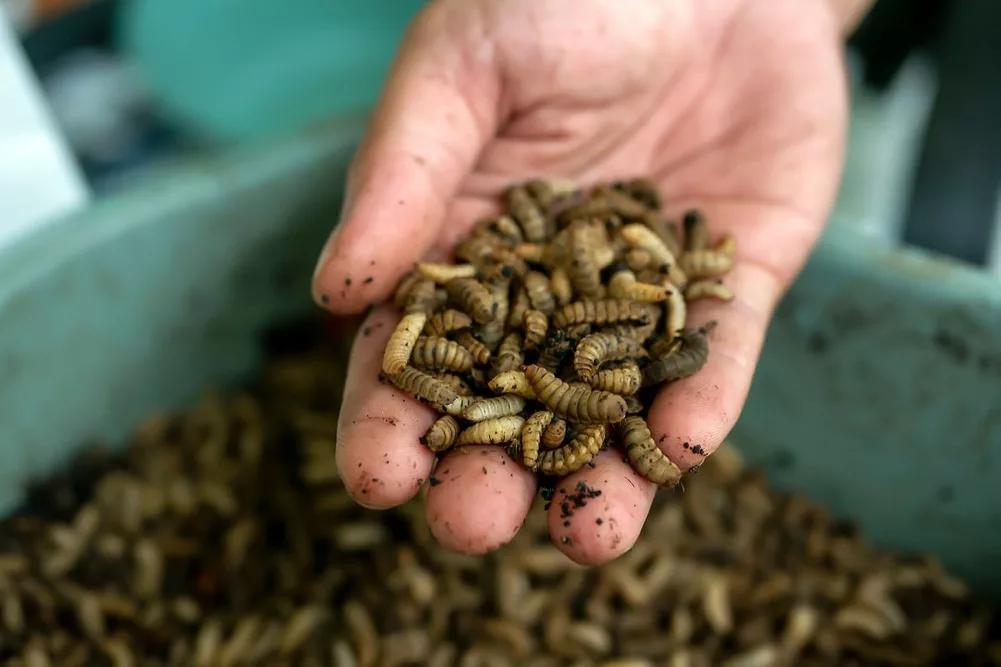
The Black Soldier Fly (BSF), Hermetia illucens, is a beneficial insect that has gained worldwide recognition for its ability to convert organic waste into valuable resources. Today, BSF farming is considered one of the most promising solutions for sustainable livestock feed production, waste management, and environmental conservation.
Historical Background


The Black Soldier Fly is native to the Americas but has spread naturally and through human activities to tropical and temperate regions across the world. Scientists first described the species in the 18th century, but its economic value was not widely recognized until the late 20th century.
For many years, BSF was simply regarded as an insect commonly found around decaying organic matter. Researchers later discovered that its larvae could rapidly consume large quantities of organic waste while producing high-quality protein and fat. This discovery sparked interest in using BSF as an alternative source of animal feed and a tool for waste management.
During the 1990s and early 2000s, universities and research institutions began conducting extensive studies on BSF biology, waste conversion efficiency, and nutritional composition. These studies demonstrated that BSF larvae could replace a significant portion of fishmeal and soybean meal in livestock diets.
Global Expansion of BSF Farming


As the global population continues to grow, the demand for animal protein has increased significantly. Traditional feed ingredients such as fishmeal and soybean meal have become more expensive and environmentally challenging to produce.
BSF farming emerged as a sustainable alternative because it:
- Converts waste into valuable protein.
- Requires less land and water.
- Produces fewer greenhouse gas emissions.
- Supports circular economy systems.
- Reduces dependence on conventional feed ingredients.
Today, BSF farming is practiced in countries across:
- Africa
- Asia
- Europe
- North America
- South America
- Australia
Several countries have established commercial-scale BSF production facilities that process thousands of tons of organic waste annually.
Global Importance of BSF Farming
1. Waste Management
BSF larvae can consume:
- Food waste
- Fruit and vegetable waste
- Agricultural residues
- Animal manure
- Brewery and processing by-products
This helps reduce landfill waste and environmental pollution.
2. Sustainable Animal Feed
BSF larvae provide:
- High-quality protein
- Essential amino acids
- Healthy fats
- Minerals such as calcium and phosphorus
They are widely used in:
- Poultry production
- Fish farming
- Pig farming
- Pet food manufacturing
3. Environmental Protection
BSF farming contributes to:
- Reduced methane emissions
- Reduced waste accumulation
- Improved nutrient recycling
- Lower pressure on wild fish stocks
4. Economic Development
BSF farming creates opportunities for:
- Youth employment
- Agribusiness development
- Feed production enterprises
- Organic fertilizer businesses
5. Food Security
By producing affordable livestock feed, BSF farming helps farmers increase production of:
- Fish
- Poultry
- Pork
- Eggs
This contributes to improved food availability and nutrition worldwide.
Key Milestones in BSF Farming
| PeriodDevelopment | |
| 1700s | BSF scientifically identified |
| 1900s | Initial biological studies conducted |
| 1990s | Research on waste conversion begins |
| 2000s | Commercial interest increases |
| 2010s | Large-scale BSF farms established globally |
| Present | BSF recognized as a sustainable protein source worldwide |
Critical Thinking Questions
- Why has BSF farming gained popularity in recent years?
- How can BSF farming help solve waste management problems?
- Why is BSF considered an alternative to fishmeal and soybean meal?
- How does BSF farming support environmental sustainability?
- What challenges might countries face when adopting BSF farming?
- Why is BSF farming important for developing countries?
- How does BSF farming contribute to food security?
- Why is reducing dependence on fishmeal important?
- How does BSF farming support the circular economy?
- What role could BSF farming play in the future of agriculture?
Answers
- Because it provides sustainable solutions for feed production and waste management.
- By converting organic waste into useful products.
- Because its larvae are rich in protein and nutrients.
- By reducing waste, pollution, and pressure on natural resources.
- Limited awareness, technical knowledge, and investment.
- It creates jobs and provides affordable feed resources.
- It helps increase livestock and fish production.
- To protect wild fish populations and reduce feed costs.
- It converts waste into reusable resources.
- It can become a major source of sustainable protein and organic fertilizer.